
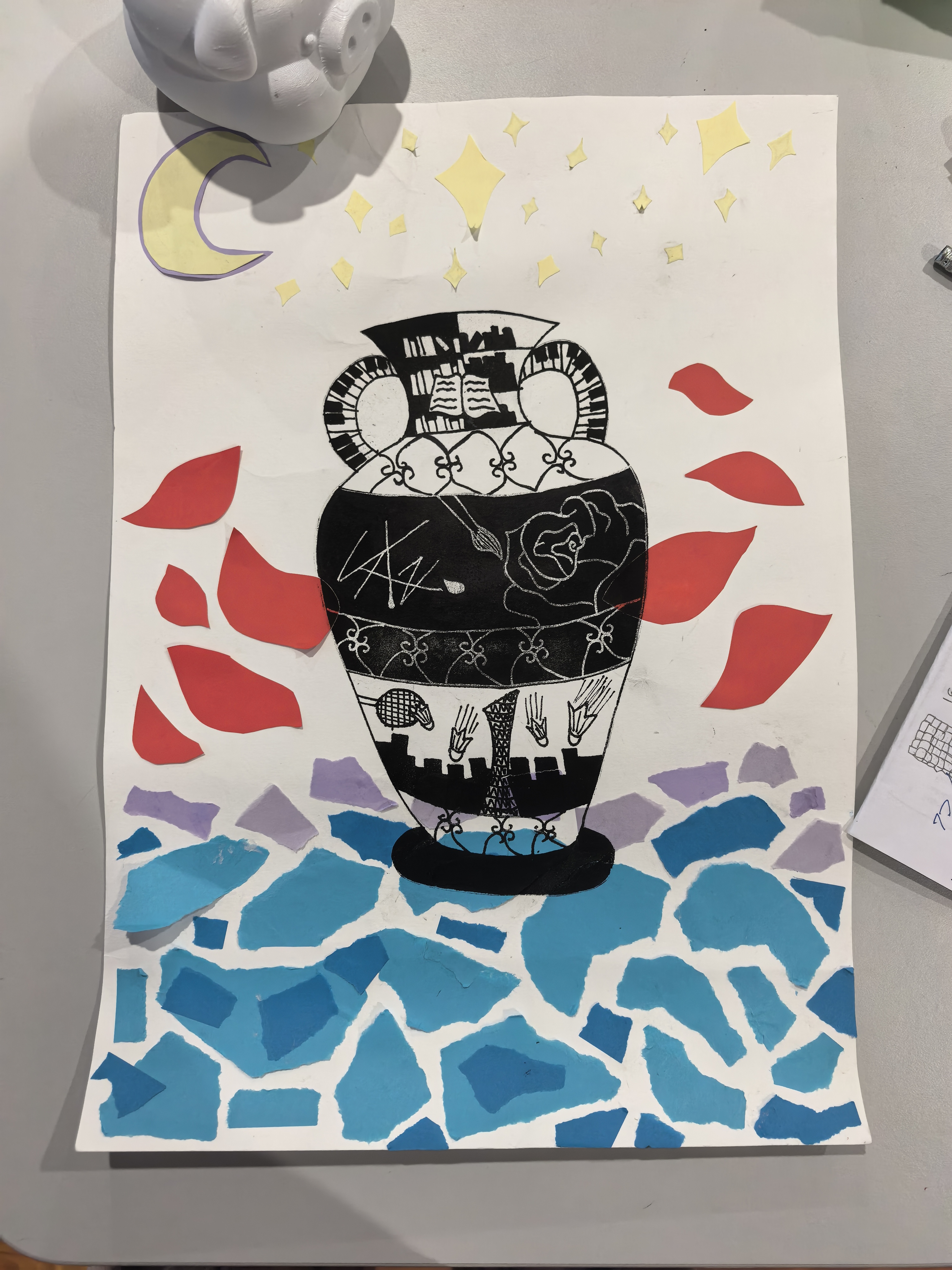
This vase began with a drawing my daughter made at school. When I first saw it, I felt there was something special in it. It was not just a picture of a vase. It was a small map of her interests, memories, and imagination.
So we tried a family design experiment: could we take the drawing from paper, turn it into a digital 3D concept, and make a first physical sample?
The Story in the Design
Each part of the vase carries part of her life. The two handles are designed like piano keys because she plays the piano. The mouth of the vase is inspired by books and bookshelves, representing learning and reading. The middle section is about painting, with a rose, a paintbrush, and freehand marks, because she is learning oil painting and sketching.
The lower section is about badminton. Shuttlecocks and rackets move around the base, giving the bottom of the vase more energy. There is also a tower inspired by the Canton Tower in Guangzhou, from a family trip we took together. That small detail makes the vase feel personal: it is not only about hobbies, but also about memory.
From Drawing to 3D
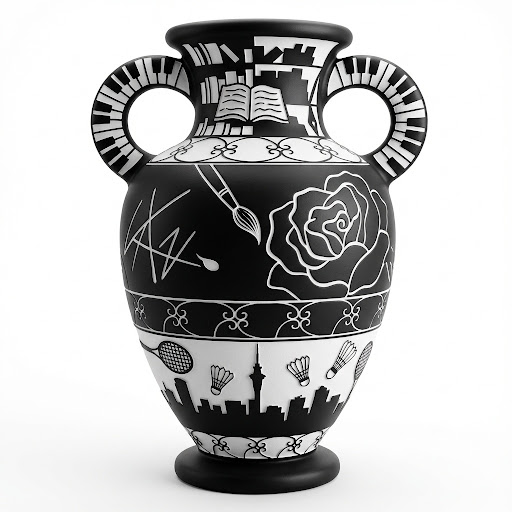
Before using a 3D tool, we first translated the drawing into design language: overall shape, key symbols, surface details, material feeling, and printability. I used Gemini to organise the idea into an English prompt, then used Meshy to generate a 3D concept.
A three-dimensional round vase, shaped like an ancient Greek amphora,
features a matte black ceramic body adorned with intricate white relief
or etched patterns.

The ring-shaped handle is decorated with abstract black-and-white
geometric designs and piano-key textures, while the middle section is
adorned with an elegant rose, a few freehand strokes, and a paintbrush.

The base features a silhouette-like city skyline in black, within which
the Auckland Sky Tower is visible, along with the outlines of several
badminton shuttlecocks and rackets.

Under soft lighting, the vase reveals a striking contrast between its
sharp contours and intricate textures.
The prompt was useful because it turned a child’s drawing into something a 3D tool could understand. It also showed why human review still matters: the prompt mentioned the Auckland Sky Tower, but the real inspiration was the Canton Tower in Guangzhou. AI gave us a fast draft; we still needed to correct the meaning.
What This Project Teaches
This project is a simple example of product design: start from a personal idea, identify the meaningful symbols, translate the sketch into design language, make a digital model, then create a sample and learn from it.
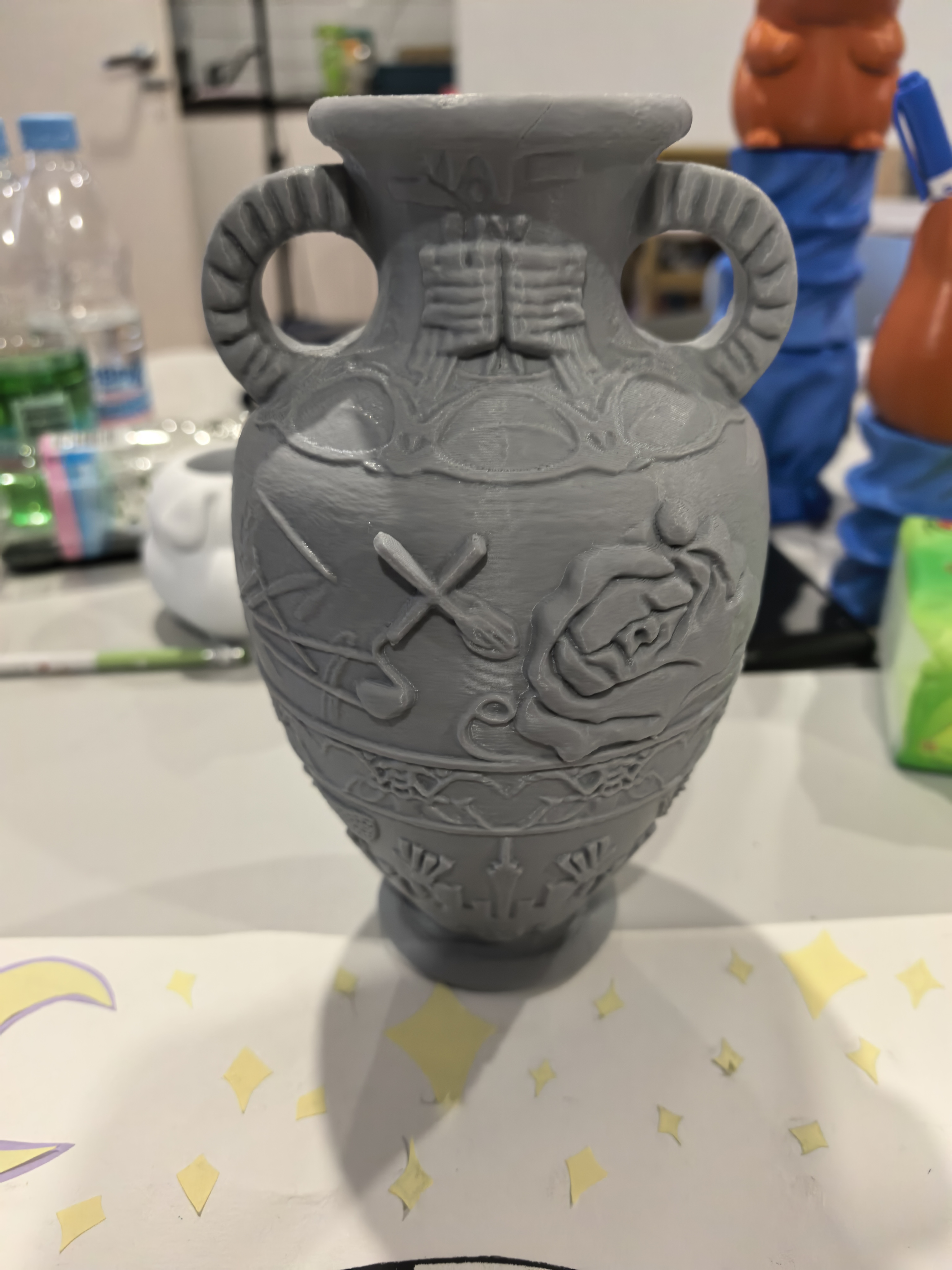
The first 3D print is not the final answer. It is a test we can hold in our hands. It helps us see whether the proportions feel right, whether the patterns are clear, and which details should be simplified or strengthened in the next version.
Next Version Ideas
For the next version, the main goal is to make the story easier to read. The piano-key handles could be clearer, the tower should be corrected to Canton Tower, and the surface details could be refined so the rose, paintbrush, shuttlecocks, and rackets print with more depth.
We may also test a more finished ceramic look, such as matte black, warm white, deeper relief, or small accent colours, while keeping the original child-designed symbols visible.
Copyright and Attribution
This vase is an original family design project documented by bmstudyhub for teaching, portfolio, and non-commercial showcase purposes. Unless written permission is granted by the author and guardian, the design may not be copied, modified, sold, mass-produced, or used commercially.
Suggested attribution:
Vase design concept inspired by original artwork by [Child's Name].
Design development, AI-assisted prompt writing, 3D modelling workflow and prototype documentation by bmstudyhub.
Copyright (c) 2026 [Family Name / bmstudyhub]. All rights reserved.
For future competition, sale, or production use, the original drawing, prompt drafts, Meshy records, model files, prototype photos, and revision notes should be kept as a clear creation record.